Catholic Bishops Regret Oval Office Visit as Trump Approval Slides
Archbishops Grob and Joensen say they believed the meeting was private, but a video released by a White House aide sparked debate two weeks before the midterm election.
By Jason Lee ·
Only 30 percent of United States Catholics now approve of President Donald Trump’s job performance, a drop from 47 percent when he took office in 2025, according to a Pew Research Center survey released this month. The new data arrives amid a controversy involving two senior Catholic leaders who met with the president at the White House on October 22.
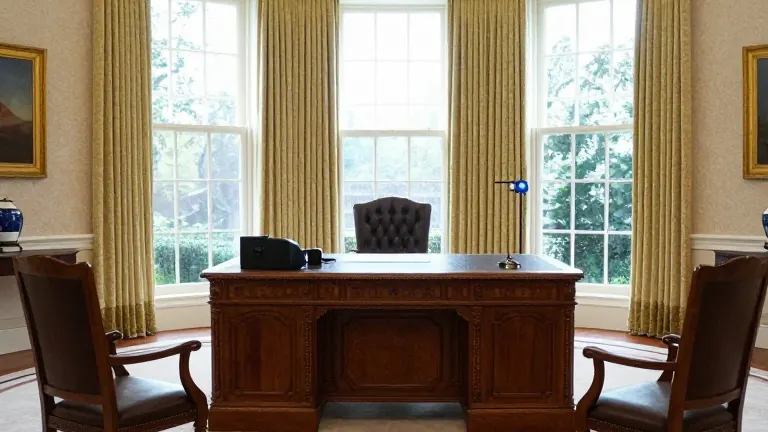
Photos and video from that visit show a group of bishops standing around the Resolute Desk in the Oval Office. Milwaukee Archbishop Jeffrey Grob and Des Moines Bishop William Joensen both expressed regret over the incident in statements issued this week. They said they believed the gathering was a private discussion rather than a public appearance.
Joensen, who serves in Iowa, explained that White House Faith Office officials arranged the meeting to discuss immigration, visas for international clergy, and the exploitation of vulnerable poor persons. He stated that no one in the group intended to endorse a specific political party or candidate by participating in the session.
The dispute centered on the release of visual media from the event. Margo Martin, a special assistant to the president and communications adviser, posted the video on social media. Martin frequently shares behind-the-scenes images of Trump. Grob said that after spending 90 minutes with administration officials, the religious leaders were brought into the Oval Office to pray with the president.
Grob noted that none of the participants granted permission for the public distribution of the photos or video. He reported receiving messages of serious concern from congregants who feared he had inadvertently participated in a political event just 10 days before the November 3 midterm election. Some parishioners also expressed feeling wounded because they or their families had been harmed by the president’s policies.
Joensen used the phrase "exploitation" to describe how the meeting was handled. He wrote that he wished he had been more shrewd and less simple, comparing himself to those who used the meeting for partisan political purposes. The White House did not directly address the bishops’ comments when contacted for comment. Instead, Spokeswoman Taylor Rogers issued a statement praising Trump’s record, calling him the greatest president for Catholic Americans.
The religious dynamic surrounding the election is shifting. Pew Research data shows that 42 percent of Catholics prefer the Democrats running in their local House of Representatives races, while 39 percent favor Republicans. This preference gap is notable given that both Vice President JD Vance and Secretary of State Marco Rubio are Catholics who have visited the Vatican during the current administration.
Tensions have also arisen between the White House and the Vatican. Pope Leo XIV has maintained a contentious relationship with Trump, particularly regarding the administration’s aggressive moves to remove people believed to be in the country illegally. In September, Bishop Brendon Cahill and Walter Kim, president of the National Association of Evangelicals, issued a statement urging Christian compassion and wisdom in the immigration debate. They criticized the clampdown for sowing fear and fracturing families.
The US Conference of Catholic Bishops recently condemned the administration’s plan to livestream a military execution, a plan that was later scrapped. Robert Barron of Minnesota, a member of the bishops’ conference, agreed to serve on the president’s Religious Liberty Commission last year. Former New York Archbishop Timothy Dolan also joined that commission. These appointments and recent policy disagreements have placed the relationship between the Catholic hierarchy and the administration under scrutiny as voters head to the polls.
Source: BBC News