False bomb threats force emergency inspections at European airports
Seven flights and one cruise ship underwent security checks on Tuesday, with Ryanair accounting for four of the targeted aircraft.
By Jason Lee ·
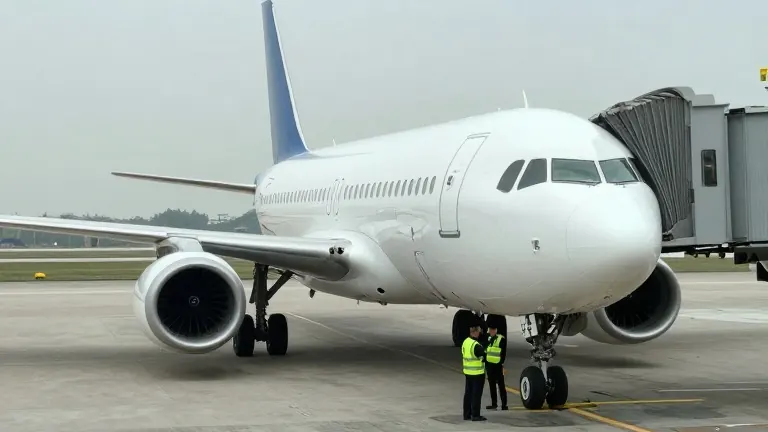
Passengers on at least seven commercial flights and one cruise ship faced emergency security searches across Europe on Tuesday after a wave of bomb threats. All incidents proved to be false alarms, and every aircraft landed safely without the discovery of any explosive devices.
The disruption affected major carriers including Ryanair, Wizz Air, Scandinavian Airlines, and LOT Polish Airlines. Ryanair, the Irish budget carrier, was the most frequent target, with four separate flights to different destinations receiving warnings. No single entity claimed responsibility for the alerts, and officials from the affected nations did not publicly assign blame to a specific group.
In Poland, two flights bound for Warsaw were targeted. Scandinavian Airlines Flight SK751 from Copenhagen landed at Warsaw Chopin Airport and required a runway closure for inspection. Alexandra Lindgren Kaoukji, a spokesperson for the airline, told the Polish news agency PAP that the plane landed normally and passengers disembarked without an emergency declaration. The case has been referred to Polish police.
A LOT Polish Airlines Boeing 737 Max from London Heathrow was diverted to Warsaw Modlin Airport, the city's secondary hub. The airport closed following the alert, but Adam Szablowski, a spokesman for Modlin, confirmed that nothing was found during the search. Normal operations resumed later in the day.
Italian authorities responded to threats against two Ryanair flights arriving at Rome Fiumicino Airport. Two Eurofighter jets escorted Flight FR9611 from Dublin, which landed at 10:45 a.m. local time. The Italian Air Force stated it acted immediately upon receiving a report of a suspected threat aboard a civilian aircraft. An earlier Ryanair flight from Lisbon arrived at 9:40 a.m. and underwent anti-bomb procedures, with all checks coming back negative.
In Spain, the national airport operator Aena activated an emergency protocol for a Ryanair flight from Manchester. The plane landed in Murcia at 10:30 a.m. without incident. In Bulgaria, a Wizz Air flight from Bergamo and a Ryanair flight from Dublin were both inspected after landing in Sofia. Bulgarian officials confirmed that no explosives were found on either aircraft.
London’s Metropolitan Police reported awareness of threats against four aircraft scheduled to depart from or arrive at Heathrow Airport. They also received a warning regarding a flight at Manchester Airport. After completing checks, police stated that no security issues were identified. Late in the day, the Greek Coast Guard evacuated the Crown Iris, a Panama-flagged cruise ship anchored off Syros. The vessel, carrying approximately 1,500 people and bound for Haifa, Israel, resumed its voyage after no device was located.
These incidents followed a similar event on Monday when a Wizz Air flight from London Luton to Sofia was diverted to Budapest due to a bomb threat in midair. Hungarian Defence Minister Romulusz Ruszin-Szendi noted on Facebook that NATO’s air-defence alert service flagged the flight and that Hungarian Gripen fighter jets escorted it to the ground within minutes.
European officials have recently blamed Russia and Iran for a series of hybrid attacks and acts of sabotage, though both Moscow and Tehran deny the campaign. This week, unidentified hackers also shut down refrigerators in supermarkets across several European countries. Rhys Jones, analysis output manager at aviation risk advisory firm Osprey Flight Solutions, described seven confirmed bomb threats in a single day as exceptional. Jones told Reuters that the lack of a clear target state, airline, or route suggests the goal is general disruption to aviation operations.
Source: Al Jazeera