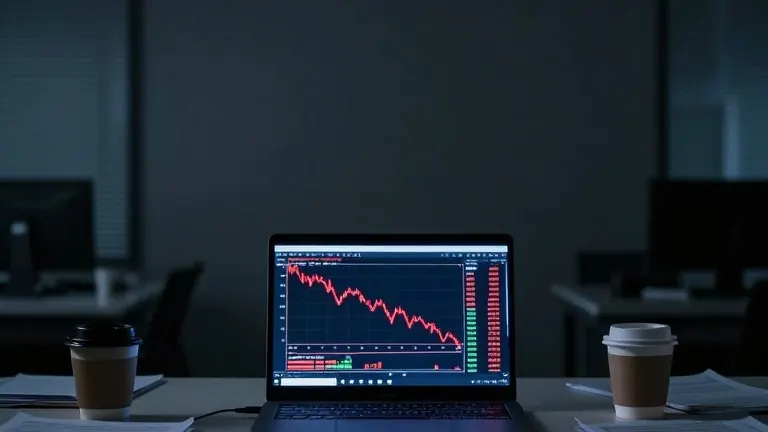
Breaking: Stocks Crater as Dow Drops 1,800 Points
The Nasdaq enters a correction after a 5.5 percent plunge, reversing Wednesday's record high rally and wiping out $2.5 trillion in value.
By Chloe Martin ·
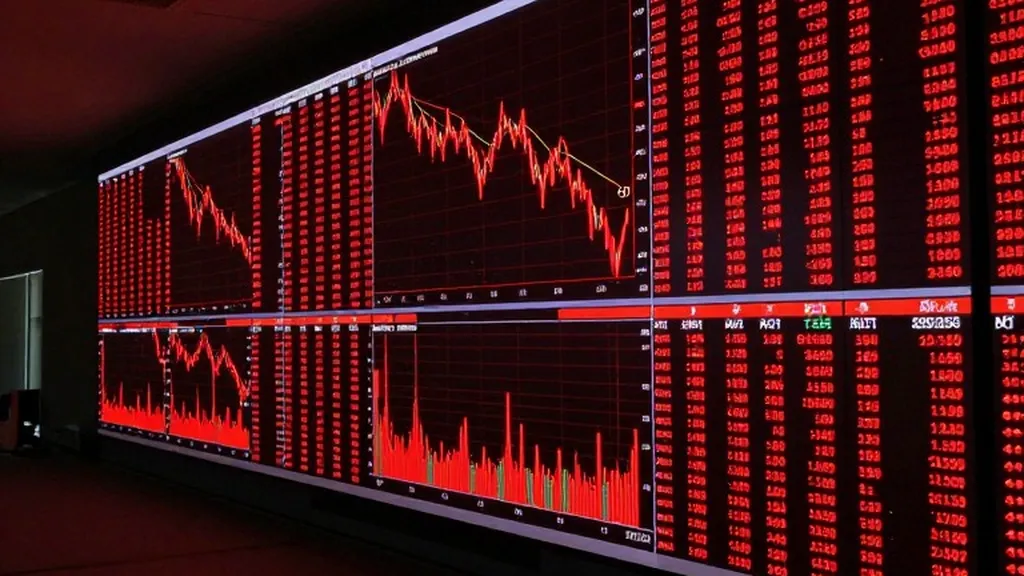
The United States stock market experienced a severe decline on Thursday, November 5, 2026, as investors reacted sharply to the results of the midterm elections. The Dow Jones Industrial Average, which tracks 30 large American companies, fell more than 1,800 points in a single session. This drop represented a 3.4 percent loss, sending the index down to close at 51,868 according to The Guardian. The move was significant enough to erase all the gains that investors had captured on Wednesday, when the market had seen its biggest daily gain of the year.
The selling pressure was not limited to the Dow but spread across the broader market. The S&P 500 index dropped 4.3 percent, marking its worst single day since April 2025, The New York Times reported. At that earlier date, President Trump had announced sweeping global tariffs, which had also triggered a sharp sell-off. On Thursday, the decline was broad based, with selling occurring in every sector of the S&P 500. As the day progressed, the pace of selling accelerated, reflecting growing anxiety among traders and institutional investors about the future direction of the economy.
The technology sector suffered the most intense damage. The Nasdaq Composite, which is heavily weighted toward tech stocks, plunged 5.5 percent. This was its worst day in eighteen months, according to The Guardian. The index closed more than 11 percent below the record it set last month, officially placing it in correction territory. A correction is defined as a fall of at least 10 percent from a recent high, while a fall of 20 percent is considered a bear market. The scale of the loss was immense, with an estimated $2.5 trillion in market value wiped out from the Nasdaq Composite, as cited by Dow Jones data in a BBC News report.
The impact on major technology firms was profound. The so called Magnificent Seven companies, which include Apple, Nvidia, and Tesla, shed about $1 trillion in value in the single trading day, according to BBC News. Nvidia was the biggest faller in the Dow, dropping 9.2 percent and losing more than $400 billion in market value. Other chip stocks also fell sharply, with SanDisk down more than 22 percent and Western Digital down 17 percent. The Philadelphia Semiconductor Index, which tracks the largest chip companies, fell more than 12 percent, continuing a trend that has seen it drop more than 30 percent since the beginning of October.
The immediate catalyst for the crash was the Democratic sweep of both the House and Senate in Tuesday's elections. Democrats had campaigned on slowing the spread of data centers and artificial intelligence infrastructure. In Texas, Democrat Gina Hinojosa won the governor's race after campaigning for an immediate moratorium on new data center construction. Investors feared that these political victories would create hurdles for the AI build out, pressuring companies that are central to that trade. The reversal of Wednesday's rally, where President Trump had boasted on Truth Social that 401(k)s were through the roof, highlighted the volatile mood of the market.
For local readers and small investors, a day like this has tangible implications for retirement accounts. Many Americans have a portion of their 401(k) or IRA funds invested in index funds that track the S&P 500 or the Nasdaq. When these indices fall sharply, the value of those retirement savings decreases on paper. While this is a paper loss until the funds are sold or withdrawn, it can cause anxiety for those nearing retirement or relying on these assets for future income. Savers who hold cash in bank accounts are less directly affected by daily stock fluctuations, but the broader economic sentiment can influence interest rates and job stability over time.
Market analysts offered various perspectives on the sell off. Neil Wilson, an investor strategist at Saxo UK, described the event as a complete capitulation level event in tech stocks. He noted that the fear was a total momentum unwind as Democrats paced the frontier and potentially stopped data center build outs. Dan Ives, a tech analyst, stated that there was no way to sugarcoat the fact that Democrats taking control would create major hurdles for AI and tech legislation. He added that the midterm results were a clear sign that the pace of data center build out would start to slow.
Despite the panic, some experts suggested that such corrections in a bull market are often short lived. Gene Goldman, chief investment officer at Cetera Financial Group, said the sell off had become exaggerated and predicted a recovery. He noted that when you have a correction in a bull market, they are typically short lived, and while it is ugly right now, he thinks they will see a bounce back soon. Frank Cappelleri, founder of CappThesis, pointed out that the Nasdaq was higher twelve months after the election in all but one of thirteen midterm cycles since 1974, though he cautioned that the path can be a volatile one.
The volatility index, known as the VIX, also spiked dramatically. It jumped as much as 5.7 points to above 28, its highest reading since March 31, 2026. The Guardian reported the VIX up 61 percent on the day. This surge in the fear gauge indicated that investors were buying options to hedge against further declines. In London, the FTSE 100 closed down 46 points, or 0.4 percent, at 10,782.66, after an early rally in Europe fizzled. The 10-year Treasury yield fell to 4.83 percent, its lowest since September, as investors bought bonds as a safe haven during the stock market turmoil.
Source: BBC News, The Guardian with Reuters, The New York Times, CNBC
More Business · Unethical Practices · Report a business · Got a Story?