Georgia Martyrs: Five 16th-Century Friars to Become Blessed
The Catholic Diocese of Savannah expects 10,000 attendees for a ceremony honoring missionaries killed in 1597, marking only the sixth beatification held in the United States.
By Jason Lee ·
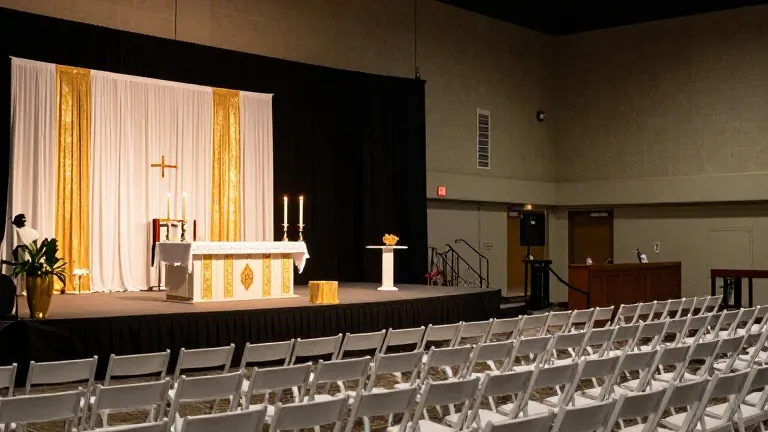
A dispute over marriage traditions in 1597 ended in the deaths of five Spanish Franciscan friars, an event that will be formally recognized by the Catholic Church this Saturday in Savannah, Georgia. The ceremony will elevate the men to the status of "blessed," a designation that places them one step away from sainthood. The Diocese of Savannah anticipates a crowd of 10,000 people for the mass, which is being held at the city's convention center to accommodate the large turnout. This gathering includes bishops from Spain, Rome, and Africa, making it only the sixth beatification ceremony to take place on U.S. soil.
The five missionaries, known locally as the Georgia martyrs, arrived in the late 16th century to minister to the Guale, an Indigenous chiefdom located in coastal villages of present-day Georgia. At that time, the region was part of Spanish Florida. Historian John Worth, a professor at the University of West Florida, noted that Spain relied heavily on these missionaries as its primary ambassadors to the Guale. The friars established churches and living quarters within the villages, assisting the locals with Spanish systems and agricultural tools while also pushing for conversion to Christianity.
Tensions rose for about two years after the friars arrived, culminating in a violent confrontation on September 14, 1597. Friar Pedro de Corpa opposed Juanillo, a baptized Christian and nephew of a Guale chieftain, who intended to take a second wife in accordance with Guale tradition. De Corpa argued that polygamy violated divine law. Later that day, a group of warriors led by Juanillo attacked de Corpa's hut while he prepared for morning Mass. They killed the friar with stone clubs. In the following days, Guale warriors attacked other nearby missions, killing four additional friars: Blas Rodriguez, Miguel de Anon, Antonio de Badajoz, and Francisco de Verascola.
Bishop Stephen Parkes, who leads the Savannah diocese, said the friars' sacrifice remains relevant to modern believers. He stated that while most people in the United States are unlikely to face martyrdom, the event invites individuals to consider what they are passionate enough to die for. The ceremony in Savannah follows a similar event in St. Louis earlier this month, where 50,000 people attended the beatification of Archbishop Fulton Sheen.
The path to this recognition has been long and bureaucratic. U.S. bishops first proposed the missionaries for beatification in the 1950s, and the Diocese of Savannah joined the effort in 1984. In 2007, a Franciscan historian transported a nearly 500-page report to Rome in a sealed box. The Vatican spent nearly 20 years reviewing the historical records to ensure they aligned with Catholic doctrine. In January 2025, Pope Francis signed a decree recognizing the friars as martyrs, a decision that paved the way for the upcoming ceremony.
The determination of martyrdom was critical because no miracle was cited to support their beatification. Under Vatican rules, a person can be beatified as a martyr without a miracle if they died at the hands of religious persecutors. Surviving Friar Pedro Fernandez wrote to the governor of Spanish Florida in October 1597, describing the slain missionaries as "little lambs" at the moment of their deaths. He also recorded a Guale leader proclaiming that there was no longer any Christianity in the area. Several Guale men told Spanish authorities that the friars had interfered with their ancestral traditions, including the practice of men taking multiple wives.
Historians note that the 1597 killings occurred during a complex period of colonization. RaeLynn Butler, secretary of culture and humanities for the Muscogee (Creek) Nation, stated that the events happened when Indigenous peoples were struggling to preserve their sovereignty. Butler added that while the killing of the friars was tragic, the history of the Guale people extends far beyond those specific incidents. The Guale chiefdom was eventually decimated by raids that enslaved its people for English settlers, and by the mid-1700s, remaining members had fled to Cuba or were absorbed by other tribes, including the Muscogee (Creek) Nation.
The Savannah diocese launched a website, a documentary film, and a bronze monument to increase awareness of the friars' story while the Vatican review was pending. Bishop Parkes said the diocese would not actively solicit a miracle, which is required for sainthood, but would leave that outcome to faith. The ceremony will take place this Saturday, marking the formal end to decades of advocacy and research.
Source: Greenwich Time