Afghan Poppy Fields Return: Taliban Ban Weakens as Farmers Face Hunger
UN data shows opium cultivation more than quadrupled this year to 43,300 hectares, driven by falling incomes from legal crops.
By Chloe Martin ·
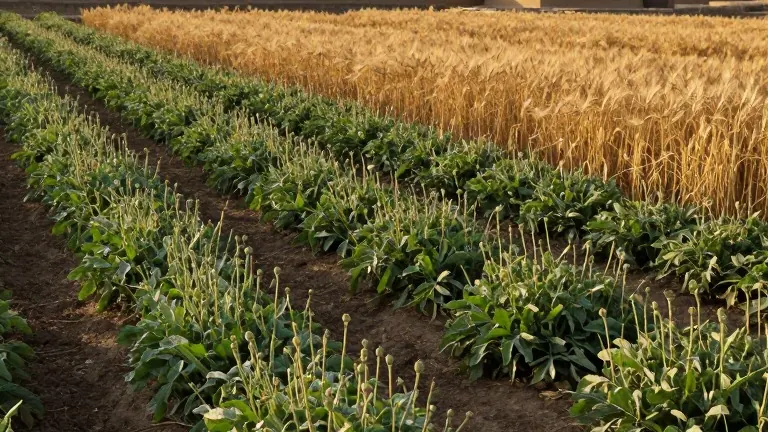
The Taliban’s four-year ban on opium production is collapsing as farmers in northern Afghanistan return to poppy cultivation. The United Nations Office on Drugs and Crime reported Thursday that poppy fields expanded sharply this year. This reversal threatens the ruling regime’s flagship anti-drug policy and could alter heroin supply chains across Europe.
In Baba Yusuf, a village in Balkh province, a 28-year-old farmer named Mohammad Dawood described the economic shift. He said he now works cotton and wheat fields that yield far less than poppy did. Dawood stated that he earns one-fortieth of his previous income on bad days. His children are now malnourished, a condition he attributes directly to the drop in earnings.
UNODC data indicates that cultivation across Afghanistan rose to an estimated 43,300 hectares this year. That figure is more than four times the amount recorded in 2025. The agency used satellite imagery to track the growth. Farmers are planting poppies inside cereal fields and behind mud walls to hide them from Taliban inspectors. Balkh province, which was declared poppy-free last year, is now growing the crop again.
The total area under cultivation remains at about a quarter of the 177,000 hectares planted in 2021, the year before the ban. However, opium sales generated an estimated $525 million this year. That is the highest value since 2018, excluding the price spike in 2022 when the ban first drove prices up.
The Taliban rejected the UN findings. They claimed actual cultivation was half the UN estimate and said eradication efforts are continuing. The Taliban-run Interior Ministry did not respond to a request for comment. Polleak Ok Serei, the UNODC country representative for Afghanistan, said many farmers have no other choice but to return to poppy.
Aid groups link the return to poppy with a rise in child malnutrition. UN agencies warned this month that 10 of Afghanistan’s 34 provinces have critical levels of child malnutrition. That number could reach 14 provinces in 2027. Doctors at the Alam Khil health center in Balkh cited declining farm income as the primary cause of severe cases.
Gul Nazar, a 56-year-old landowner, said drought has reduced fresh water access, leaving well water too salty for many crops. Cotton prices have fallen by about two-thirds due to a nationwide surplus. He blamed part of the price drop on Pakistan closing its border late last year. Nazar said he would not grow poppy if his family’s conditions improved, but he could not promise the same if they worsened.
Source: KELO