
Canada and EU prepare to sign 'Alliance for the Future' in Montreal
The two blocs aim to deepen ties in defense and trade following a trade breakdown with the United States.
By Chloe Martin ·
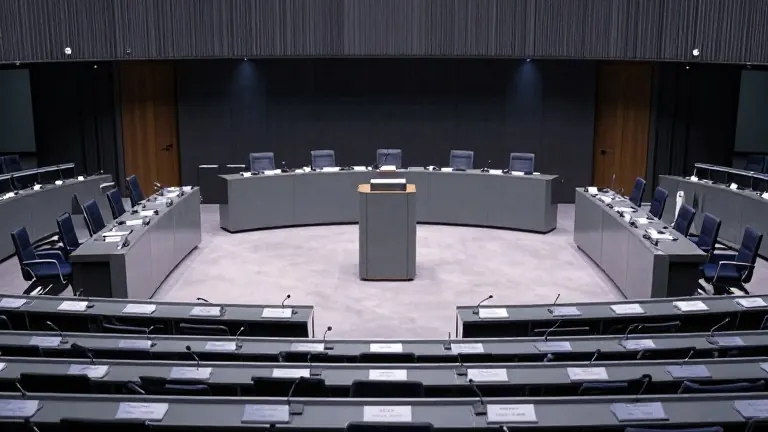
Canadian Prime Minister Mark Carney and European Council President Antonio Costa are set to launch a formal 'Alliance for the Future' on October 29 in Montreal. The initiative marks the start of the 21st Canada-EU summit, which runs through October 30.
The summit focuses on expanding cooperation beyond the Comprehensive Economic and Trade Agreement, or CETA, which has been in force since 2017. That existing deal eliminates duties on up to 99 percent of imported goods between the two sides. The new alliance is expected to cover trade, technology, defense, energy, critical minerals, artificial intelligence, research, and financial services.
European Commission President Ursula von der Leyen proposed in September that Canada become the EU’s first 'associate member.' Carney welcomed the idea, describing his goal as a 'unique alliance' rather than standard EU membership. The three leaders are expected to issue a joint statement at the conclusion of the meetings.
The timing of the summit follows a sharp decline in relations between Ottawa and Washington. In August, trade talks between Canada and the United States broke down. Trump subsequently imposed a 50 percent levy on $20 billion of Canadian goods, a sum that represents 5.5 percent of total Canadian exports.
Canada responded with equivalent tariffs on US steel, dairy, appliances, farm equipment, pulp, paper, and electronics. Before these disputes, Canada sent nearly 80 percent of its exports to the United States. Both sides now seek to open more options beyond the world’s largest economy.
A key component of the new partnership involves defense. The EU describes Canada as the only non-European country participating in Security Action for Europe, or SAFE. This is a 150 billion euro loan program that supports defense procurement by EU member states. An agreement concluded in February gives Canadian firms preferential access to procurements financed by the SAFE Instrument.
Vina Nadjibulla, co-founder and CEO of the Centre for Strategic Statecraft in Ottawa, noted that specific announcements in these sectors are likely. She identified the speed at which political momentum converts into concrete deals as the main challenge. The term 'associate member' does not currently exist in EU treaties, according to the Centre for European Policy Studies.
Trump has threatened the European Union with new tariffs over the associate member proposal. He called the prospect of Canada joining the EU 'laughable' and described the country as a 'terrible trade partner.' Former Ontario premier Bob Rae, who served as Canada’s UN ambassador from 2020 to 2025, stated that engaging with the EU is not directed at the United States.
Source: Al Jazeera