Carbon dating places Westminster Abbey skeleton in 10th or 11th century
Analysis of a Roman sarcophagus suggests it was reused for a high-ranking monk who died around the year 1020 or 1049.
By Jason Lee ·
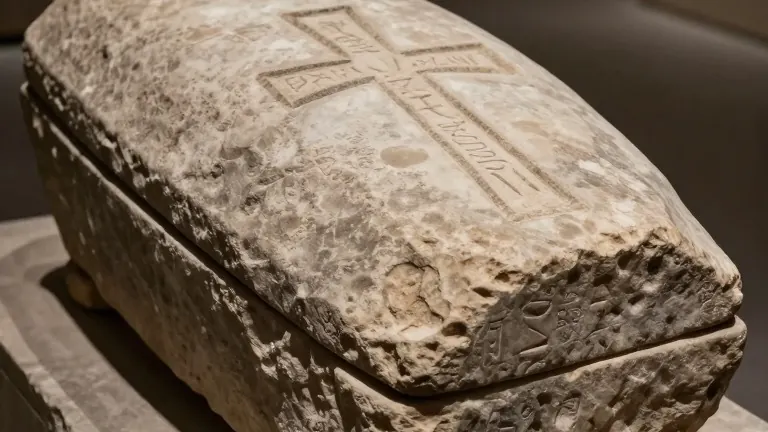
Carbon dating of a human skeleton found inside a Roman sarcophagus at Westminster Abbey indicates the remains are from the period between 987 and 1052 CE. A new study published in the Journal of the British Archaeological Association proposes that the bones belong to a medieval monk rather than the Roman figure originally associated with the container.
The limestone sarcophagus was excavated at the Abbey in 1869. An inscription carved into the stone identifies the original owner as Valerius Amandinus, a wealthy individual who lived between 300 and 400 CE. However, researchers noted that the lid features a sculpted Latin cross, a design that dates to approximately the 10th or 11th century. This discrepancy suggested the sarcophagus was repurposed for a burial that occurred several centuries after it was first carved.
Professor Warwick Rodwell, a consultant archaeologist at Westminster Abbey and the lead author of the study, argues the occupant was a high-ranking monk. He identifies two potential candidates: Aelfwig, who served as Abbot and died around 1020, or his successor Wulnoth, who died in 1049. Rodwell stated that both men fit the timeline if they were appointed in their early twenties and died near age fifty. He added that Aelfwig may be the more likely candidate because he was already a monk of Westminster at the time of his appointment.
In 2016, the sarcophagus was analyzed by Pre-Construct Archaeology (PCA). Specialists found a rectangular outline marked by white lime residue inside the stone vessel. Rodwell explained that this residue outlined a timber coffin that has since decayed over seven centuries. The presence of this wooden inner coffin supports the theory that the deceased received a more elaborate burial than the original Roman inscription implies.
PCA human bone specialist James Young Langthorne estimated the individual was between 35 and 49 years old at death and stood approximately 5 feet 9 inches tall. The skeleton showed signs of joint disease, healed rib fractures, and an infection in the lower right leg. The skull had been repaired, with the lower jaw wired to the cranium in three locations.
The sarcophagus is currently on public display in the Queen’s Diamond Jubilee Galleries at Westminster Abbey.
Source: The Jerusalem Post