Catholic Horror: Why Hollywood Keeps Casting Priests as Monsters
A new book argues that Catholic theology provides a ready-made toolkit for the most effective horror films, from The Exorcist to The Omen.
By Jason Lee ·
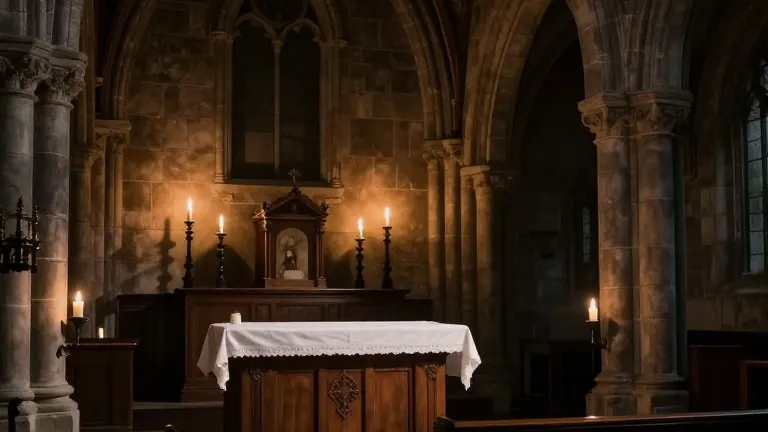
Hollywood has a persistent problem with priests. In the genre of horror, Catholic clergy rarely appear as calm spiritual guides. Instead, they show up as the only characters capable of standing between a family and the devil. This specific religious flavor has become a defining trait of the genre, stretching back to the 1970s.
Matthew Cressler, co-author of the new book Body And Blood, argues that this is not an accident. He says the visual and theological elements of Catholicism align naturally with the requirements of a scary story. The white clerical collar offers a sharp contrast against darkness, and the tradition of sacred rituals provides a structured way to fight the occult.
Cressler points out that other Christian denominations lack these dramatic hooks. When a vampire knocks on the door, he notes, viewers do not expect the homeowner to call a Methodist. The Catholic tradition of suffering and redemption gives filmmakers a built-in narrative engine. A character bearing pain can be framed as drawing closer to Christ, a concept that translates easily to the screen.
Director Aislinn Clarke, who grew up in a Catholic household, describes her childhood perspective on the faith through the lens of horror. She recalls watching the Eucharist and thinking the ritual was somewhat cannibalistic. This early association helped prepare her for a career making scary movies, where blood and flesh are central themes.
The genre often amplifies these theological ideas to extreme levels. In the film Saint Maud, a Catholic nurse recreates the suffering of Christ by lining her shoes with metal spikes. These scenes rely on the viewer's prior knowledge of Catholic practices to create fear. The horror comes from the distortion of familiar rituals.
Reverend Aaron Williams, a pastor at St. Mary's Basilica in Mississippi, consulted on the 2025 horror film The Ritual. He explains that a priest acts with the authority of Christ through ordination. This sacramental character gives the priest a specific power that a layperson does not have. Films use this heightened authority to justify why a single priest can banish demons that ordinary people cannot touch.
Some filmmakers use Catholic imagery to critique the church itself. Clarke's 2018 film The Devil's Doorway features bleeding statues and demonic possession. However, Clarke says the most horrific scene involves nuns singing hymns while ignoring a woman in labor. The film uses the contrast between sacred song and physical suffering to highlight institutional failure.
Cressler notes that these cinematic tropes can shape how audiences view the real church. A room with too many candles and crosses signals danger to a horror movie viewer. This association persists even when the film is not explicitly about Catholicism. The genre continues to borrow these elements because they offer a clear path from fear to redemption, at least until the next sequel.
Source: Central Florida Public Media