Four Men Keep Barbershop Harmony Alive in New Orleans
Southern Tradition performs in Mid City, linking a century-old vocal tradition to the city's musical heritage.
By Jason Lee ·
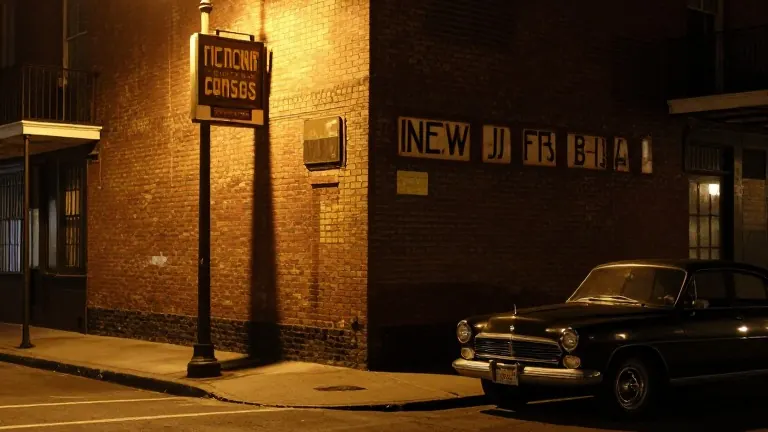
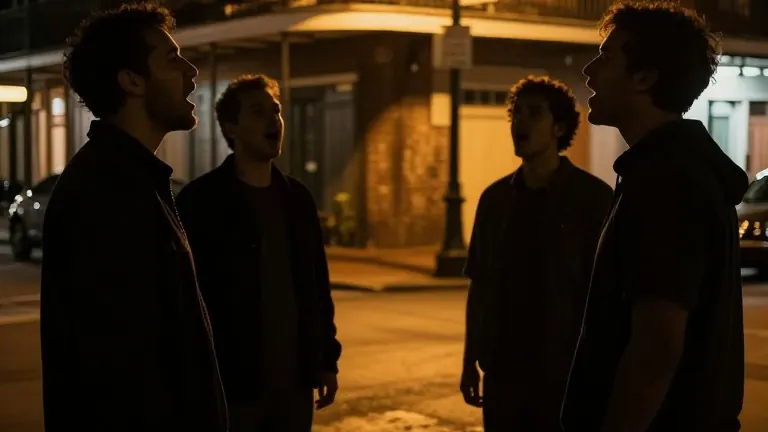
Four-part harmony echoed through the streets of Mid City on a recent evening, marking the continued presence of barbershop singing in New Orleans. The group, Southern Tradition, has performed together since 1999. They operate as a social circle where members maintain a traditional American art form while managing their individual professional lives.
Karl Hansen, a physician who sings bass, noted that the primary requirement for participation is a willingness to continue despite initial discomfort. "The main attribute to be a barbershop quartet singer is to not be embarrassed, just keep going," Hansen said. The other members of the group have distinct careers. Hansen Eschette is a medical technician who sings tenor. Joe Jacquat is a civil engineer who covers the baritone part. Johnnie Oufnac sings lead. Oufnac is the only member who works as a barber, a detail that aligns with the group's name.
Long-term collaboration allows the singers to anticipate one another’s vocal movements. "Being together for a long time helps us harmonize and understand where the other person is going," Hansen explained. While barbershop quartets have existed for over a century and operate globally, New Orleans maintains strong ties to the genre. Zachary Matherne, an award-winning singer, described the city as a central point for foundational American music. He pointed to local history to support this connection, noting that Louis Armstrong performed in a vocal quartet before he began playing the trumpet.
Matherne also performs with NOLA Vox, a larger vocal group that produced The Dreamers, a coed barbershop quartet. Recent participation by women has introduced new dynamics to the traditionally male format. Sarah Todd, a member of The Dreamers, described the experience as a form of friendly competition. "It’s a lot of fun to see where you stack up against somebody else," Todd said. Matt Ridley, another singer, emphasized the technical benefit of including female voices. "We need the ladies to hit the high notes," Ridley said. "We do have some gentlemen, but they’re not as attractive."
Most local performers sing for personal satisfaction rather than financial gain, even though New Orleans hosted a major international competition in 1992 at the Superdome. Matherne confirmed that event as the most recent international gathering in the city. For smaller local groups, the focus remains on camaraderie and musical precision. "I think it’s beautiful, when you learn the parts really well and it all comes together it’s really amazing," Ridley said.
Southern Tradition and similar local groups rehearse every few weeks. The singers maintain their vocal routines in a city with a deep history of musical performance.
Source: FOX Carolina