Morocco welcomes end of UN mission in Western Sahara after Russian veto
The Security Council failed to renew the Minurso mandate, leaving a power vacuum in a territory where a fragile ceasefire has held for decades.
By Jason Lee ·
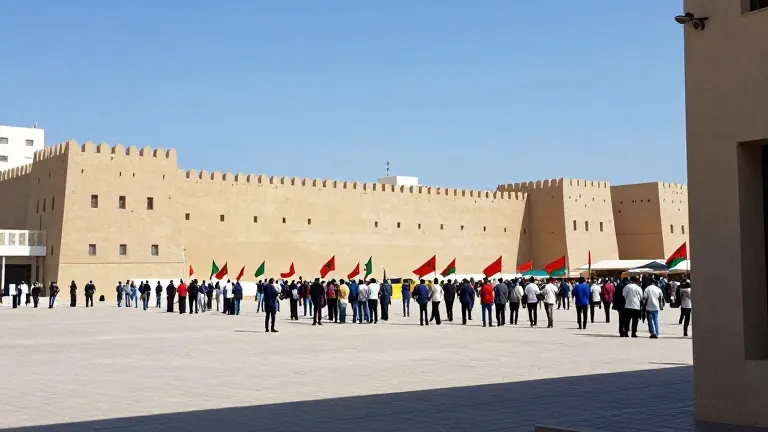
Morocco has celebrated the expiration of a long-standing United Nations peacekeeping mission in Western Sahara, a move that leaves the region without its primary international monitor. The Security Council could not agree on the mission's future after a diplomatic split between the United States and Russia blocked both renewal proposals on Friday.
The UN Mission for the Referendum in Western Sahara, known as Minurso, was established in 1991 to oversee a ceasefire and organize a vote on the territory's status. That referendum, originally scheduled for 1992, never took place due to disputes over voter eligibility. The mission's mandate lapsed at the end of October 31, prompting the UN to enter a liquidation phase with a smaller team managing the removal of assets.
The United States proposed extending the mission for another year while removing the word "referendum" from its name and anchoring negotiations to Morocco's 2007 autonomy plan. That draft garnered support from 11 of the 15 council members, including France and the United Kingdom, but Russia cast a veto. A rival Russian draft to extend the mission without changes failed to secure enough votes, receiving only two.
In the territory's largest city, Laayoune, residents gathered to wave flags and display portraits of King Mohammed VI. House of Representatives Speaker Ahmed Touizi addressed a joint session of parliament on Monday, describing the outcome as a diplomatic victory. He stated the country should now focus on implementing its autonomy plan and continuing development projects in the region.
The Polisario Front, which has fought for independence since 1973, condemned the US proposal. Its representative, Sidi Omar, said the draft would "torpedo the foundations of the UN peace process." Morocco's Foreign Minister Nasser Bourita clarified that the end of the mission does not signal the end of the ceasefire, noting Rabat remains committed to it within the framework of its security and sovereignty.
Security experts warn that Minurso's departure could create gaps in monitoring military activity. Issam Laaroussi, a Moroccan international relations expert, noted that while the conflict already exists, the mission's absence could aggravate a fragile environment. The dispute remains central to tensions between Morocco and Algeria, with the Stockholm International Peace Research Institute reporting that Algeria spent an estimated $25.4 billion on military expenditures last year, compared to Morocco's $6.3 billion.
Source: BBC News