Rebucci: Wealthy Spend More of Income as Midterms Near
Johns Hopkins economist explains how the K-shaped economy drives voter perception ahead of November.
By Jason Lee ·
The wealthiest American households spend a higher percentage of their income than the poorest, according to data cited by Alessandro Rebucci, an economics professor at Johns Hopkins Carey Business School. This spending disparity defines the current K-shaped economy, where asset owners and high earners gain while middle and lower-income groups lag.
The divergence in economic sentiment is a central theme as voters prepare for the midterm elections. Rebucci noted that voters judge the economy based on their personal cost-of-living experiences rather than aggregate data. He stated that while the overall economy appears strong in the numbers, the distribution of that strength dictates how large segments of the population feel about their financial situation.
President Donald Trump has consistently described the U.S. economy as performing well during campaign appearances. At a rally in Las Vegas on Aug. 5, the president declared, “The economy is the greatest economy we’ve ever had, by far.” This stance conflicts with recent consumer surveys that show many voters holding a more negative view of their personal economic conditions.
Historical patterns suggest this disconnect is common in election years. The party in power typically emphasizes the strength of the broader economy to counteract individual grievances. Rebucci observed that Americans have long coexisted with economic inequality, describing the current system as one that is comfortable with the gap between income levels.
Rebucci argued that the primary goal is not to eliminate inequality but to adjust the system so people can live better with it. He emphasized that the most important perception for voters is the belief that they have a chance to reach the top 10% or top 1% of earners. This perception of upward mobility remains a key factor in how the electorate evaluates economic policy.
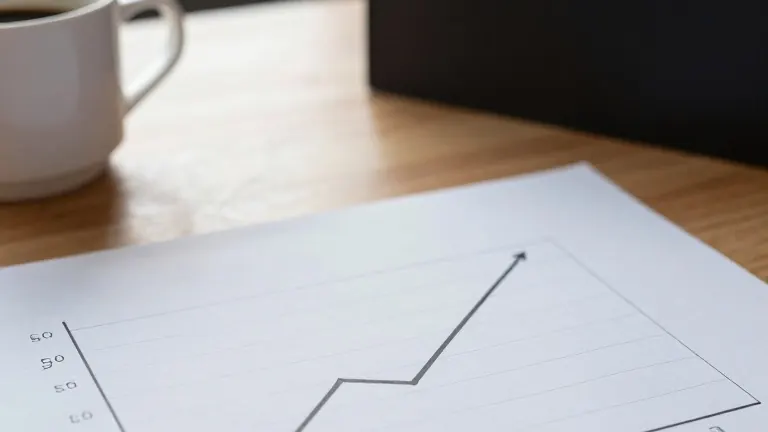
The K-shaped graph used by economists to depict this split shows high-income earners and asset owners pulling ahead of the middle and lower-income brackets. As the campaign trail continues, this gap between macroeconomic data and microeconomic experience will likely remain a point of contention.
Rebucci’s analysis highlights that the perception of economic health is driven by how the economic pie is distributed. Voters are focused on their specific slice rather than the size of the whole pie, a dynamic that will shape the November ballot.
Source: WHPM-LD
More Business · Unethical Practices · Report a business · Got a Story?