
Rhode Island EV Owners Pay New Registration Fees to Cover Road Costs
The state collected $6.7 million in the first six months as it seeks to replace gas tax revenue lost to electric vehicles.
By Chloe Martin ·
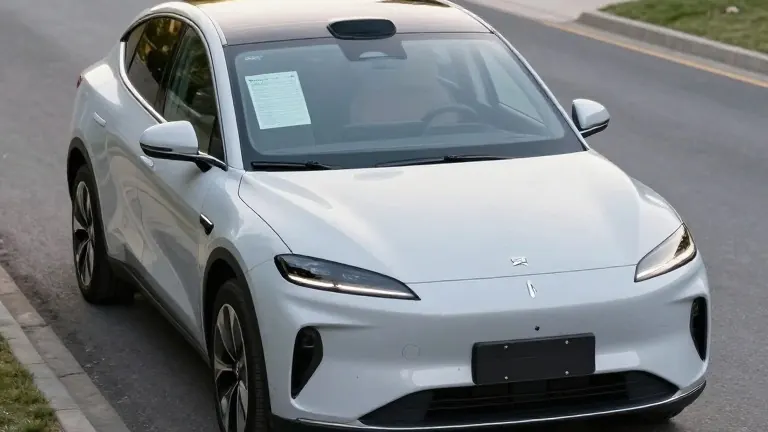
The state of Rhode Island collected $6.7 million in new electric vehicle registration fees between January and June. This revenue stream was established to offset the decline in gas tax collections as more drivers switch to electric and hybrid vehicles. The fees went into effect on January 1, 2026, and apply to battery electric, plug-in hybrid, and hybrid cars.
Under the new rules, battery electric vehicle owners pay an additional $200 per year. Plug-in hybrid owners pay $100, and hybrid owners pay $50. These amounts are added to the standard state registration fee. The state budget office projects that these fees will generate $13.9 million for the highway maintenance account by 2030.
Electric vehicle owners have voiced opposition to the charges, arguing they penalize the switch to greener transport. A Reddit user noted that the fees feel like a punishment rather than an encouragement. Eric Desrosiers, president of the New England Electric Auto Association, called the flat fee structure unfair because it does not account for individual mileage.
Desrosiers pointed out that the average Rhode Island driver travels approximately 9,936 miles annually. At current tax rates, that mileage equates to about $136 in state gas taxes. Therefore, a BEV owner paying the $200 flat fee pays roughly $64 more than the average gas-powered driver for the same usage. Virginia Reeder, director of innovation at the Eastern Transportation Coalition, acknowledged that gas taxes are consumption-based, while the new registration fee is a flat charge.
The state currently relies heavily on gas tax revenue for infrastructure. Rhode Island collected $165.5 million in gas taxes during fiscal 2025. However, the Rhode Island Public Expenditure Council warned that the per-penny yield is stagnating due to rising fuel efficiency and the adoption of electric vehicles. The council projected a $3.9 million annual decline in gas tax yield by 2030 if current trends continue.
Rhode Island is one of 41 states that impose additional registration fees for electric and hybrid vehicles. The rates vary widely across the country. South Carolina charges the lowest fee at $60 per year, while New Jersey charges the highest at $270. Only nine states, including Massachusetts and New York, do not charge extra for these vehicles.
Federal Highway Administration data shows that electric vehicles make up a small portion of the state's vehicle fleet. Of 838,866 registered vehicles in Rhode Island, only 16,853 are classified as electric. This group includes 10,518 battery electric vehicles. The remaining electric vehicles are classified as hybrids. The state continues to study mileage-based user fees as a potential long-term replacement for the gas tax.
The Eastern Transportation Coalition has conducted 14 passenger vehicle pilot programs across 14 states involving more than 3,250 vehicles. The coalition also ran three commercial vehicle pilot programs across 48 states and Canada for over 500 trucks. These studies aim to provide data for states crafting new transportation funding policies.
Source: ecoRI News
More Business · Unethical Practices · Report a business · Got a Story?