Arab blocs projected to capture 18 Knesset seats
Exit polls show historic turnout among Palestinian citizens of Israel complicates coalition math for both major political blocs.
By Chloe Martin ·
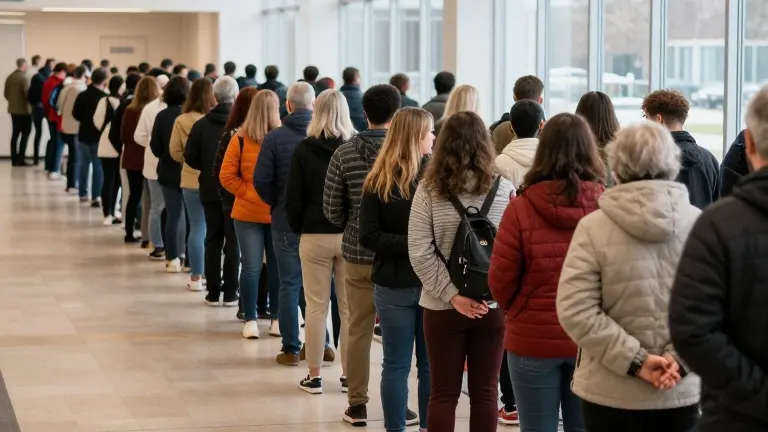
Exit polls from Tuesday's legislative election project that Arab-led parties will secure 18 seats in the 120-member Knesset. This figure represents a record high for Palestinian citizens of Israel in the parliament. The result stems from a surge in voter participation that officials described as the highest since 1999.
The Central Elections Committee reported an overall turnout of 77.7 percent, also a multi-decade high. Channel 12 cited early data showing approximately 80 percent turnout among the roughly 21 percent of Israel's 10 million residents who are Palestinian citizens. This demographic has historically voted at lower rates than their Jewish counterparts.
The seat count creates a tight balance of power. Gadi Eisenkot's Yashar party, which is led by a former military chief of staff, is tied at 51 seats with the bloc led by Prime Minister Benjamin Netanyahu. Neither side has yet reached the 61 seats required to form a governing coalition. The opposition bloc includes the Joint List and Ra'am, the two leading Arab-led parties.
Mansour Abbas, leader of Ra'am, said the current numbers prevent the formation of a government. He told Channel 12 that the anti-Netanyahu bloc hopes final results will allow them to reach the necessary threshold. Abbas noted that both major blocs approached his party before and after the vote. Ra'am held five seats during the 2021 to 2022 coalition.
Alon Pinkas, a former Israeli ambassador, stated that coalition building will be difficult because many opposition candidates pledged not to partner with Arab parties. He argued that political leaders can no longer treat Arab votes as a temporary asset to be used only when needed. Pinkas said Arab-led lists will likely make demands that Jewish-led coalitions may resist.
Netanyahu's camp used the high Arab turnout as a campaign tool on election day. Likud supporters drove through parts of Jerusalem playing the Islamic call to prayer over loudspeakers to urge voters to the polls. Netanyahu posted images of long lines in Arab communities on social media, warning that inaction would lead to a government led by Mansour Abbas and Ahmad Tibi. Arab politicians criticized this strategy as inflammatory.
Nour Odeh of Al Jazeera described the election as an existential moment for Palestinian-Israelis. She noted that the turnout included voters who typically abstain due to doubts about the impact of their participation. The Knesset has passed more than 100 laws that discriminate against Palestinian citizens, who also face hurdles in accessing state funds.
Source: Al Jazeera
More Business · World news · Unethical Practices · Report a business · Got a Story?