Arab-led blocs win 19 Knesset seats in record turnout
Voter participation among Israeli Arabs surged by more than 60% from 2022, handing the opposition a potential path to displace Prime Minister Netanyahu.
By Jason Lee ·
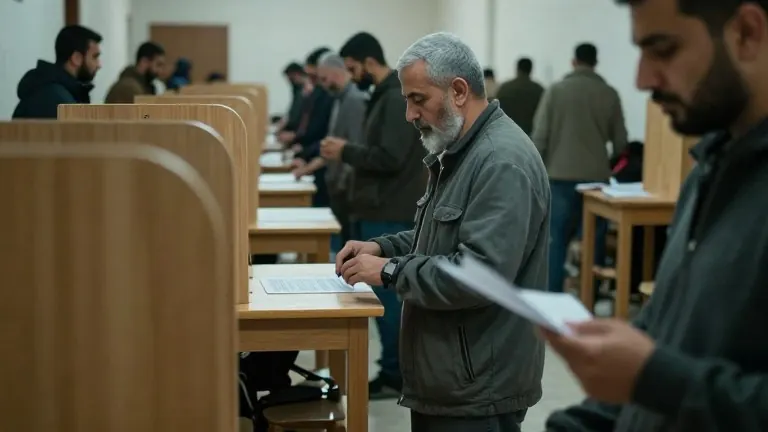
Arab-led parties won 19 seats in Israel’s 120-member Knesset in the general election held on Tuesday, a historic high for the blocs. The result gives opposition leaders the numerical strength to potentially form a coalition to remove Prime Minister Benjamin Netanyahu from power.
According to the Central Election Committee, more than 800,000 voters cast ballots for Ra’am and the Joint List. This represents a 60% increase in participation compared to the 2022 elections. The two groups surpassed their previous record of 15 seats.
Mazn Ghnaim, the mayor of Sakhnin, said the surge in voting was a response to rising violence and political marginalization. The city recorded the highest voter turnout in the country at 87%. In the Bedouin village of Tarabin, where Netanyahu’s party won majorities in the last two elections, Ra’am captured 93% of the votes. Turnout in that community nearly doubled.
Ghnaim stated that voters viewed the election as an emergency measure against right-wing allies of the government. He cited recent attacks on Arab university students and doctors in hospitals. "I want to protect my electors so they do not kill them, my children so they do not attack them in their universities, and the Arab doctors so they do not assault them in the hospitals," he said.
Benjamin Netanyahu intensified his campaign against Arab parties, warning on X that allying with them would lead to the "Islamization of Israel." He also made unverified claims that foreign powers bribed voters. Gadi Eisenkot, the main rival to Netanyahu, denied plans to form a coalition with Arab-led parties during the campaign, though the math now suggests it may be necessary.
Eisenkot has set conditions for an alliance, requiring partners to declare Israel a Jewish and democratic state and to label Hamas a terrorist organization that must be dismantled. Mansour Abbas, leader of Ra’am, acknowledged Israel as a Jewish state in 2021. Yousef Jabareen, leader of the Joint List, said he has not yet spoken with Eisenkot but is ready to negotiate. Both parties have condemned the October 7, 2023 attack by Hamas but have resisted formally designating the group as a terrorist organization.
Tamar Hermann, a senior researcher at the Israel Democracy Institute, noted that Israel is moving away from liberal democracy toward an ethnic democracy. She said the political shift complicates Eisenkot’s ability to maintain support if he partners with these parties. Abbas expressed confidence that Ra’am would join a government, while Jabareen said his bloc hoped for protections and equality for Palestinian citizens.
Source: Stamford Advocate
More Business · Unethical Practices · Report a business · Got a Story?