Cities pay remote workers up to $20,000 to move
Cumberland, Maryland, launched a pilot program offering $20,000 to ten new residents, joining a national trend of cash incentives designed to reverse population loss in post-industrial towns.
By Jason Lee ·
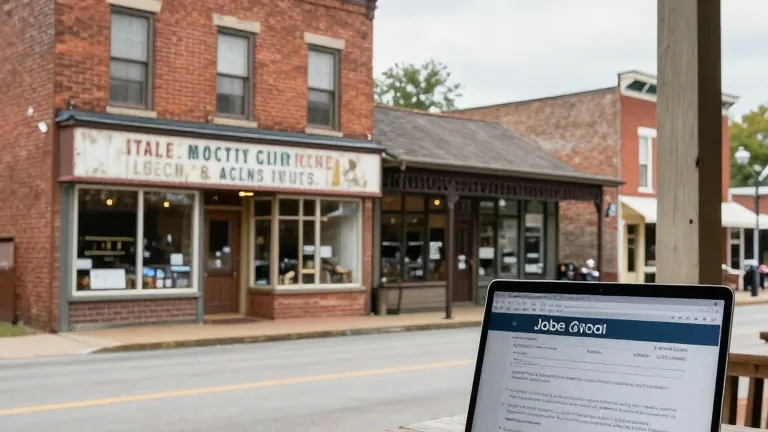
Cumberland, Maryland, is offering $20,000 to each of ten remote workers who agree to relocate to the city. The pilot program, named Choose Cumberland, splits the payment into $10,000 in cash and $10,000 toward a down payment or approved home renovations. Recipients must establish Cumberland as their primary residence for at least five years. The offer targets individuals who can work from anywhere, a demographic that has grown since the pandemic normalized remote labor.
The incentive is a direct response to a long-term demographic shift. The population of Cumberland, located about 130 miles from Washington D.C., fell from over 40,000 to fewer than 19,000 after major manufacturing employers closed starting in the 1970s. Mayor Ray Morriss noted that the city is trying to bring in people who bring their jobs with them. The goal is to replace local employment with remote income, stabilizing the tax base in a region that has struggled to attract new residents for decades.
This strategy is part of a wider national trend. The website Make My Move lists more than 100 locations currently advertising cash offers to attract new residents. Tulsa, Oklahoma, has implemented one of the largest programs, Tulsa Remote, which pays participants $10,000 to move and rent or buy a home. The program began before the pandemic as an effort to diversify a workforce heavily reliant on oil and gas. Justin Harlan, managing director of Tulsa Remote, explained that the initiative was an experiment to broaden the local labor market.
Tulsa Remote has expanded from approximately 70 participants in 2019 to more than 3,500. While the program only requires a one-year residency, Harlan stated that the retention rate beyond that period is 90 percent. Since 2019, 75 percent of participants continue to live in Tulsa. The organization maintains this stability by meeting with each new resident within their first 90 days to understand their needs and integrate them into the community.
Research supports the value of long-term retention over short-term financial gain. Evan Starr, an associate professor at the University of Maryland’s School of Business, studied the Tulsa program to assess if other localities could benefit from similar tactics. He found the retention rates to be notable. Starr warned that cities do not want people who come solely for the money and leave as soon as restrictions end. He believes remote work has permanently increased geographic mobility, detaching workers from the physical location of their employers.
Individuals are responding to these financial and social incentives. Faith Langevin moved from Atlanta to Tulsa in 2022, drawn by lower living costs and the $10,000 incentive. Her husband, also a remote worker, received a similar payment. Langevin cited the social component of the move as a key factor. Three years later, she described Tulsa as her home and reported no regrets about the relocation.
Local businesses in target cities are watching the influx of new residents. In Cumberland, Gino Giatras has operated a family hot dog shop since 1918. He welcomes the new neighbors, citing the people, weather, and activities as reasons to stay. The city currently has slots available for the first ten participants in the Choose Cumberland pilot program.
The next step for these communities is to track the long-term economic impact of these incentives. Tulsa Remote continues to recruit new participants, while Cumberland prepares for the first cohort of its ten-person pilot. Both programs aim to prove that cash incentives can sustainably rebuild communities that have lost their industrial bases.
Source: KOTA-TV