
GM and Ford Face $2 Billion in Rising Material Costs
Automakers report revenue gains as steel, chips, and diesel prices squeeze margins, with GM forecasting a specific financial hit this year.
By Jason Lee ·
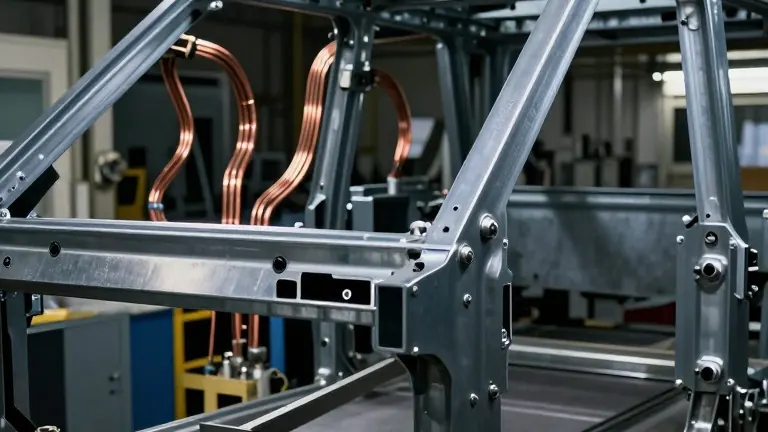
General Motors and Ford each projected that rising material costs would cost them approximately $2 billion this year. The figures, revealed during third quarter earnings calls, reflect a sharp increase in the price of essential inputs such as steel, copper, computer chips, and diesel fuel.
Despite these cost pressures, the Detroit automakers reported revenue growth. General Motors saw a 2.9% rise in revenue, Ford reported a 2% increase, and Stellantis saw a 1% gain. The companies attribute this performance to strong demand for light trucks and high-end vehicle trims, even as the average new vehicle transaction price approached record highs of just over $50,000 in September.
The primary driver of the expense is the combination of tariffs and supply chain constraints. Since 2025, additional tariffs on imported steel, aluminum, and copper have raised the cost of vehicle frames and wiring. Copper prices have climbed due to global demand for electric vehicle batteries and data centers. Computer memory chips, critical for modern vehicle electronics, have also become more expensive due to tight supply and high demand from the artificial intelligence sector.
Logistics costs have compounded the problem. The average price of diesel fuel has hovered near $6.35 per gallon, close to its all-time high. This affects the cost of transporting parts across the North American supply chain and moving finished vehicles to dealerships. Sherry Ann House, Ford's chief financial officer, noted that higher fuel prices are impacting freight and energy costs, though she said customer demand for trucks has remained resilient.
General Motors' chief financial officer, Paul Jacobson, stated that the company is still paying about $2.5 billion in tariff costs, a figure lower than earlier forecasts due to refunds. He warned that if prices remain at current levels, the challenge for next year will be greater. Jim Farley, Ford's CEO, said the company expects commodities, memory, and logistics costs to represent a year-over-year headwind of about $2 billion.
The shifting market has also impacted electric vehicle sales. One year after the federal tax credit for EVs expired, national EV sales have dropped. Tesla reported a decline in global sales compared to the same period last year, while General Motors saw a 6% drop in overall third quarter sales, partly due to a smaller EV market. However, hybrid sales have surged by 27% in the past year as consumers seek alternatives to high fuel prices.
Tesla has regained some market share in the electric segment, capturing almost 52% of new EV sales in the U.S. according to Edmunds data. Analysts suggest that as other automakers reduce EV investments, buyers are defaulting to the established Tesla brand. Meanwhile, Tesla CEO Elon Musk indicated that the company is focusing capital expenditures on robotaxis and humanoid robots, doubling its spending in these areas year-over-year.
Musk also hinted at a potential merger between Tesla and SpaceX, stating that special committees at both companies are discussing the idea. He told investors that he believes the merger would be a good idea, but emphasized that shareholders would need to be supportive. The merger would combine Tesla's automotive business with SpaceX's portfolio, which includes Starlink satellites and the Grok AI chatbot.
Stellantis executives said they would provide more details on their specific cost headwinds in the fourth quarter. The company's CEO, Antonio Filosa, described the rising prices for memory chips and raw materials as an industry-wide phenomenon. Ford executives did not address EV sales directly but highlighted the upcoming Fathom electric truck, which is expected to be available for pre-order in early 2027 at a price under $30,000.
Source: WUSF Public Media
More Business · Unethical Practices · Report a business · Got a Story?