Trawlers Haul 40,000 Salmon as Alaska Senate Race Tightens
Empty smokehouses and rising bycatch numbers have turned the Kuskokwim River into the central battleground for the state's U.S. Senate contest.
By Chloe Martin ·
Pollock trawlers have removed 40,000 Alaska salmon from the ocean this year, a figure that has become the focal point of the state's competitive U.S. Senate race. The count, provided by the industry, represents fish caught as bycatch while vessels target pollock. This number has fueled a sharp divide between coastal Indigenous communities and the commercial fishing sector as voting approaches in 2026.
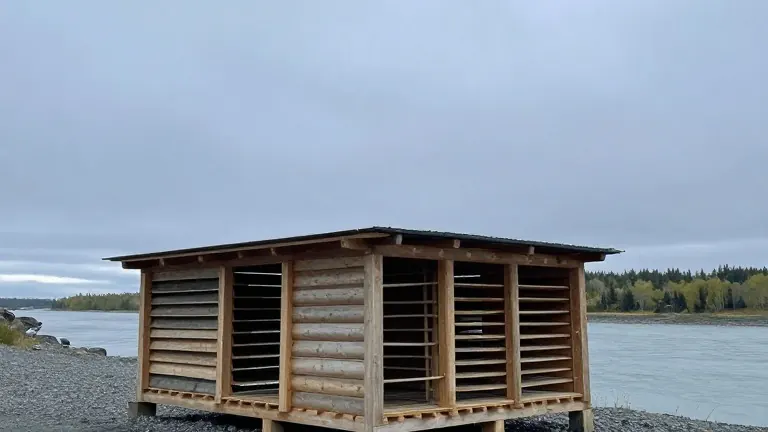
In the village of Kwethluk along the Kuskokwim River, the impact of declining runs is visible in residential structures. Mary Nikolai, the tribal president, recently entered a neighbor's cold smokehouse that remained unused throughout the summer. She described the scene as evidence of a slow trend closing out local workforce participation. Most years, these structures are filled with drying racks of fish, but this season they stand empty.
Evon Waska, a resident who lives at the water's edge, pointed to his own empty drying racks as he explained his family's history in the area. His parents settled there after abandoning a nomadic lifestyle. Waska stated that government agencies frequently close the river to fishing to conserve fish stocks, often preventing families from catching what they need to eat. He directed his criticism toward industrial trawlers operating miles offshore, noting that they are rarely closed while local subsistence fishers bear the immediate restrictions.
The conflict centers on a $1 billion industry, much of which is based in Seattle. These vessels use sock-shaped nets that stretch a quarter mile, with openings as wide as a football field, to catch pollock. The white fish is commonly processed into imitation crab products. However, the nets also capture prized king salmon and other species. These additional catches are often discarded, a practice known as bycatch that has generated growing anger among Alaskans.
Republican Senator Dan Sullivan, the incumbent, has positioned himself as an ally of the pollock industry for years. This election cycle, he is promoting a new legislative package. Sullivan described the measure as the most comprehensive bycatch legislation ever created, citing its goals to reduce waste and protect seafloor habitats. He urged supporters to call his office and express thanks for his efforts on behalf of fishermen.
Democratic challenger Mary Peltola, an Indigenous woman from the Kuskokwim region, is running on a platform that includes a ban on factory trawlers, the largest segment of the pollock fleet. She characterized Sullivan's recent legislative move as an election-year tactic. Peltola claimed that Sullivan collected over $300,000 from trawlers and delayed action until the final moments of the session to offer a half-hearted solution.
Heather Mann, who leads a trawlers association, argued that blaming the pollock fishery does not address the core issues facing western Alaska. She cited scientific findings to suggest that even if pollock fishing ceased entirely, the impact on restoring salmon runs would be minimal. This perspective contrasts with the view held by many in remote villages who see a direct link between offshore operations and local shortages.
Political advertisements across the state now feature the issue prominently. One ad praises Sullivan for championing legislation to reduce bycatch, while another criticizes him for accepting large donations from out-of-state corporate trawlers. A third ad accuses Peltola of telling fish tales to secure votes. The debate has moved from local riverbanks to the national stage, where the outcome in Alaska could influence the balance of power in the U.S. Senate.
Source: NPR