Midterm ad spending reveals how high the House race will go
Seventy districts see major investment from both parties, suggesting Democrats will likely take the chamber but facing stiff resistance in redrawn maps.
By Chloe Martin ·
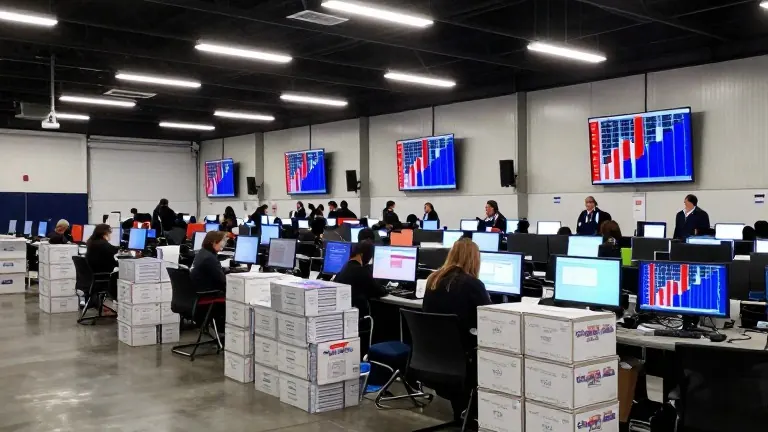
The central question of the 2026 midterm election is no longer whether Democrats can take the House, but by how much. In the final week before the November 3 vote, advertising data indicates the battleground is expansive. An NPR analysis identifies 70 districts where both parties are spending at least six figures in the closing days. This level of competition contrasts with a narrower narrative of a simple Democratic sweep.
Republicans hold a slim 218-214 seat advantage in the House. That lead is expected to flip, according to the latest Cook Political Report ratings. Democrats are favored in 220 seats. The report lists 17 districts as toss-ups and another 30 as potentially competitive but leaning Republican. The map reflects a midterm environment that historically disadvantages the party in power.
Spending patterns show where the fight is sharpest. More than $10 million has been committed to toss-up districts in Michigan, North Carolina, New York, and Florida. Michigan’s 7th District and North Carolina’s 1st District are the most expensive, with over $12 million planned for each. Republicans are also making seven-figure buys in deep-red areas in Tennessee, Oklahoma, and Arkansas. These expenditures target districts where recent gerrymandering by Republicans might backfire.
The competitive landscape was reshaped by mid-decade redistricting. A Supreme Court decision that rolled back parts of the Voting Rights Act allowed Republicans to redraw boundaries to include more conservative voters in districts held by Democrats like Marcy Kaptur in Ohio and Shomari Figures in Alabama. Democrats responded in California by adjusting lines for districts held by Republicans such as James Gallagher and Kevin Kiley. Only Figures and Darren Soto in Florida now sit in districts rated as favoring Republicans.
Voter sentiment drives the spending. An NPR/PBS News/Marist poll finds Democrats hold a 10-point lead among registered voters on the generic congressional ballot. The gap is 8 points among likely voters. Cost of living is the top concern for voters, with rising gas prices, tariffs, and the war in Iran contributing to economic anxiety. A record number of retirements has amplified anti-incumbency sentiments in primary elections.
Sixty districts are listed as priorities by both the Democratic Congressional Campaign Committee and the Republican House campaign arms. This overlap highlights the impact of the Trump administration's unpopularity. However, not every priority race is close. Many of the Democratic Committee's 'Districts In Play' gave Trump near 60% of the vote in 2024 and have seen little ad spend from either side. The average of the 70 high-spending districts voted for Trump by 9 points in 2024.
The final days will determine if the broad competitive map translates into actual seat changes. Both parties are investing heavily in the final hours to shape outcomes. The data suggests a complex fight for the House majority that extends beyond traditional swing states.
Source: WEPR