Pinellas voters choose governor as Florida Senate race heats up
Polls in Tarpon Springs and Clearwater open at 7 a.m. for a day that decides the state's next executive and a contested U.S. Senate seat.
By Jason Lee ·
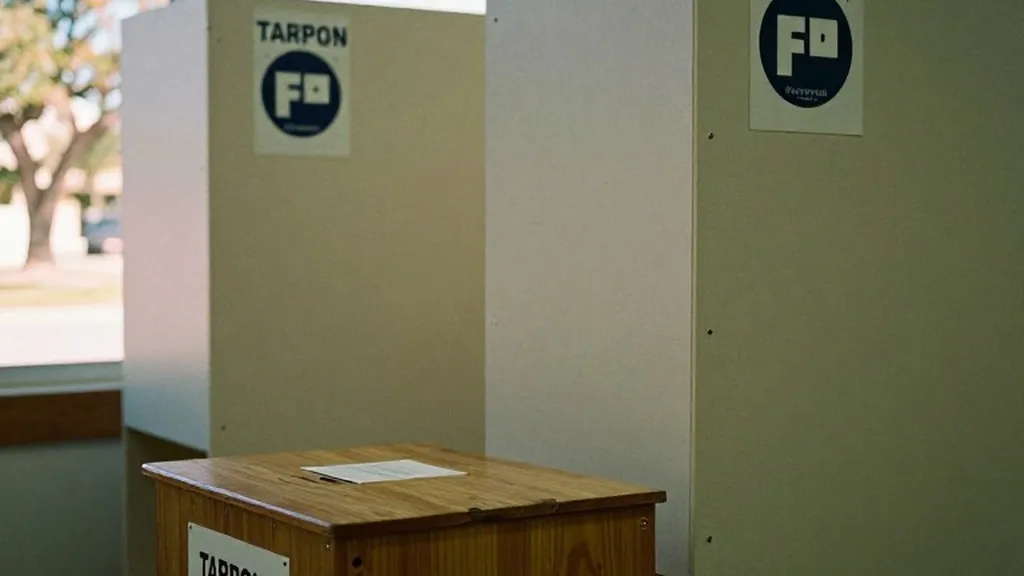
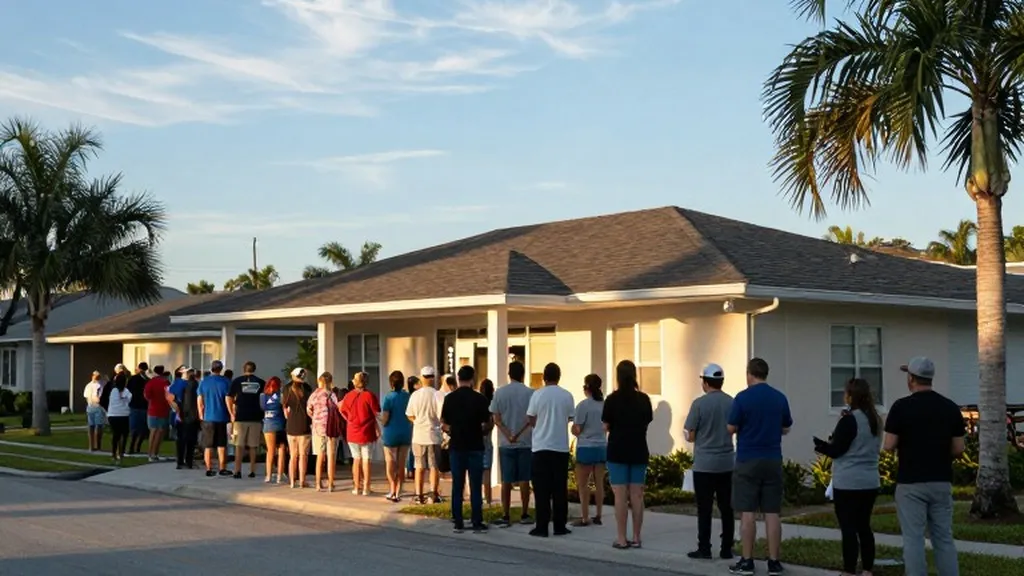
Voters in Tarpon Springs, Clearwater, Largo, and Pinellas Park are heading to the polls on Tuesday, November 3, 2026, to participate in a midterm election that will shape the balance of power in Washington for the final two years of President Donald Trump's second term. According to Ballotpedia, polls in Florida are open from 7 a.m. to 7 p.m. local time, with the state divided between the Eastern and Central time zones. Residents can verify their specific polling location at vote.gov, and anyone in line when the polls close is entitled to cast a ballot. The day marks a critical test for the Republican party, which currently holds the White House and the majority in the U.S. Senate, while Democrats seek to gain control of the House of Representatives.
Florida voters face a unique ballot configuration this cycle. There is no regular U.S. Senate election in the state this year, but a special election is taking place for the remainder of the term that Marco Rubio was elected to in 2022. Ashley B. Moody, the Republican incumbent, is on the ballot against Democratic and No Party Affiliation candidates. This race is one of 35 Senate contests nationwide, where Democrats need a net gain of four seats to secure a majority in the chamber. Republicans currently hold 53 seats, while Democrats hold 45, with two independents who caucus with the Democrats. The outcome of the Florida special election will be part of this broader calculation for control of the upper chamber.
The governor's race is a central focus in Florida, as the state has an open seat with no incumbent running for re-election. Jimmy Patronis, the Republican incumbent for the office of Attorney General, is also on the ballot, though the governor's race itself features candidates from the Democratic, Libertarian, No Party Affiliation, and Republican parties. The Associated Press notes that the governor's race in Florida is considered competitive, alongside races in Texas and Iowa. Nationwide, 36 governorships are up for grabs, with Republicans holding 26 offices and Democrats holding 24. Democrats would need to win a net gain of two governorships to achieve a majority of these offices, a feat they have not accomplished since 2010.
In the U.S. House of Representatives, all 435 seats are on the ballot, including every district in Florida. Republicans currently hold 218 seats, while Democrats hold 214, with one independent and several vacancies. Democrats require a net gain of three districts to claim a majority, whereas Republicans can afford to lose no more than two seats. Ballotpedia identifies 46 battleground districts across the country, with 25 held by Democrats and 21 by Republicans. In Florida, the new congressional maps resulting from mid-decade redistricting will be tested for the first time in a general election, a change that has drawn attention from both parties regarding how the newly drawn districts will vote.
The mood surrounding the election is described by the Associated Press as a referendum on President Trump's second term. AP-NORC polling indicates that 35% of U.S. adults approve of Trump's job performance, while only 25% approve of his handling of the economy. Approximately 70% of respondents said the country is heading in the wrong direction, with most blaming the president for high prices. The election is also being watched closely for its impact on the war with Iran, which voters have described as unpopular. More than 57 million people had already voted as of Monday, surpassing early vote totals from four years ago in many closely watched states, signaling high engagement despite the divided political landscape.
Republican committees have outraised and outspent their Democratic counterparts, aided by Trump-affiliated groups and Elon Musk, according to AP analysis of AdImpact data. At the candidate level, however, Democrats have outraised their opponents. The 2026 elections are likely to be the most expensive in history, with 88.1% of Republican general election TV ad spending directed toward states and districts that Trump won in 2024. This includes more than $850 million in spending in areas where he won by 10 points or more. The focus on high-price states reflects the party's strategy to protect its base while attempting to counter the midterm pattern where a president's party typically loses seats.
In the U.S. Senate, 13 races are considered battlegrounds, including special elections in Florida and Ohio. In Florida, the race for the remainder of Rubio's term is seen as a key contest for Republican control. In other states, such as Maine, the race is a toss-up on all four major ratings, while in Georgia, the race leans or is likely to go to Democrats. The Associated Press highlights that economic strain and tariffs have made states like Maine competitive. In the U.S. House, the focus is on the 21 Democratic-held districts that voted for Trump in 2024 and the nine Republican-held districts that voted for Kamala Harris, which are central to the fight for a majority in the lower chamber.
Election administration has seen significant legal activity in the days leading up to the vote. A federal judge temporarily barred the Trump administration from carrying out a plan to prevent noncitizen voting, a move critics say risks disenfranchising eligible voters. In California, a judge ordered the administration to stop demanding that election officials segregate ballots cast by people on lists of suspected noncitizens. The U.S. Postal Service has added hours, staff, and special lines to ensure mail ballots are counted on time. These administrative developments have added a layer of complexity to the election day logistics for voters in Florida and other states.